TRL 7 Validated · UK Industrial AI Innovation

The UK's First AI-Powered
Cyber-Physical Incident
Intelligence Platform

CyberPhysicalLayer bridges the critical visibility gap for UK SME warehouses and vehicle workshops fusing CCTV metadata, access logs, and network activity into plain-English "Incident Narratives" with sub-500ms latency. Engineered for brownfield legacy environments where enterprise tools fail.

// TRL 7 Performance Metrics
91%+Detection Acc.
<500msCorrelation
95%False Pos. Reduction
43%UK Breached 2025
60K+Sites Unprotected
99.9%Edge Uptime

Closing the Cyber-Physical
Visibility Gap

CyberPhysicalLayer (CPSL) introduces an innovative industrial intelligence platform that bridges the visibility gap for small-to-medium UK warehouses and vehicle workshops using AI-powered real-time incident reconstruction.

By combining cross-domain signal fusion, computer vision metadata, and probabilistic modeling, the system enables the instant conversion of fragmented operational logs into coherent "Incident Narratives" seamless, unified protection across logistics, manufacturing, and operational sectors.

Unlike enterprise OT tools requiring "clean" telemetry, CPSL is engineered for "Brownfield" (legacy) environments, processing patchy signals via standard hardware CCTV, network routers, and PLC logs with Edge AI ensuring reliability, security, and UK regulatory compliance.

UK GDPR Compliant
Cyber Essentials Plus
Edge AI Sovereignty
Brownfield Resilient
ISO 27001 Aligned
Narrative-First AI
Co-Founders

Muhammad Ashhar — Co-Founder & CEO

MSc Cyber Security & Forensics, University of Westminster. Leads the AI architecture and forensic deep learning models powering the Incident Reconstruction Engine (IRE), specializing in malware forensics and AI-driven anomaly detection.

Ahtisham Javed — Co-Founder & CTO

MSc Cyber Security & Forensics, University of Westminster. Expert in IoT Security and Industrial QA with professional background at FedEx Express. Leads Edge AI optimization and "workshop-hardened" testing protocols.

Contact the Founders →

Four-Stage Incident Intelligence Pipeline

Every physical and digital event passes through CPSL's four-stage intelligence pipeline converting fragmented warehouse and workshop signals into real-time "Incident Narratives," compliance-ready audit trails, and actionable operational guidance.

Cross-Domain Signal Ingestion
STEP 01

Cross-Domain Signal Ingestion

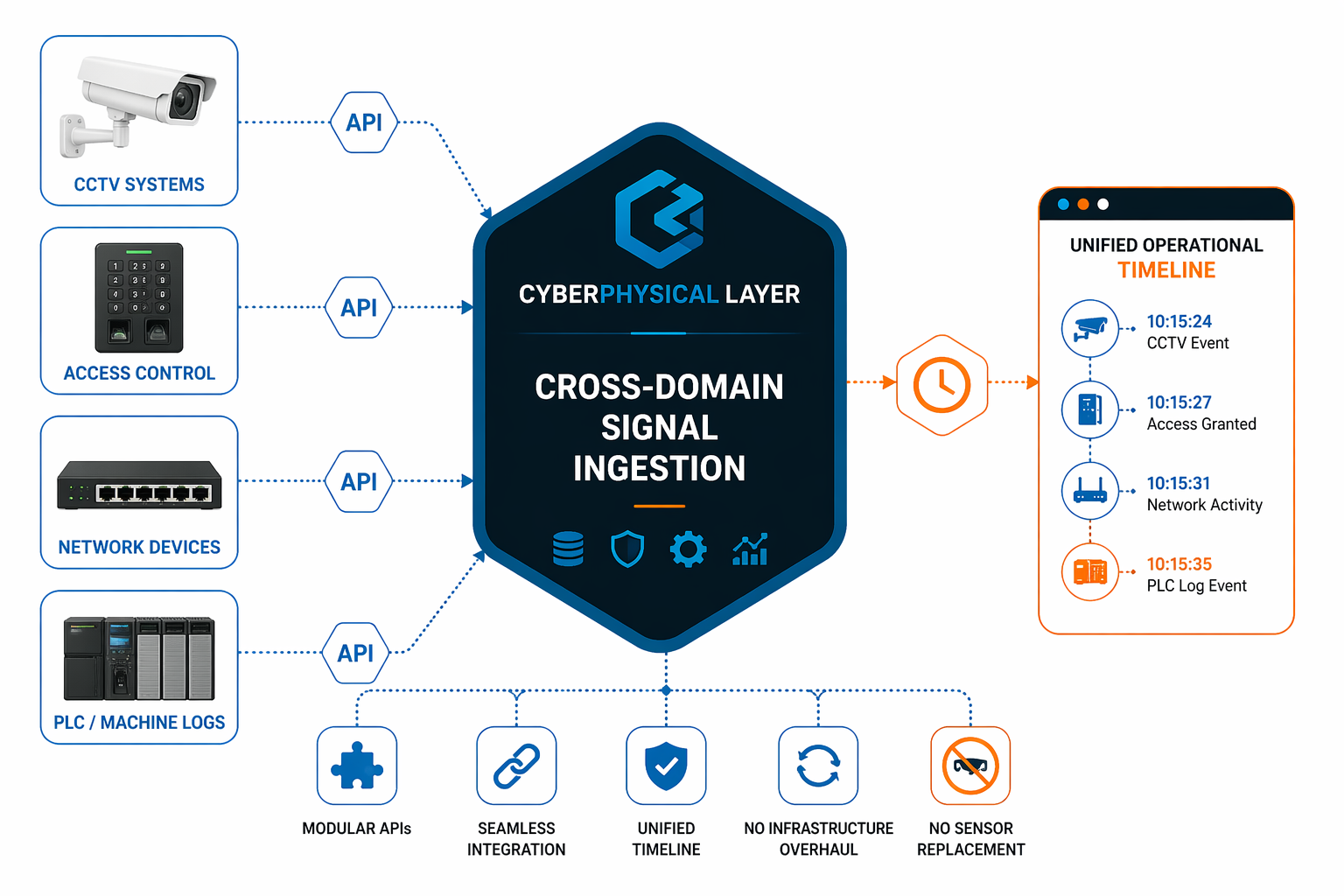
The platform connects seamlessly to existing CCTV systems, access control units, network routers, and PLC/machine logs via modular APIs creating a unified operational timeline without requiring infrastructure overhaul or sensor replacement.

Incident Reconstruction Engine
STEP 02

Incident Reconstruction Engine (IRE)

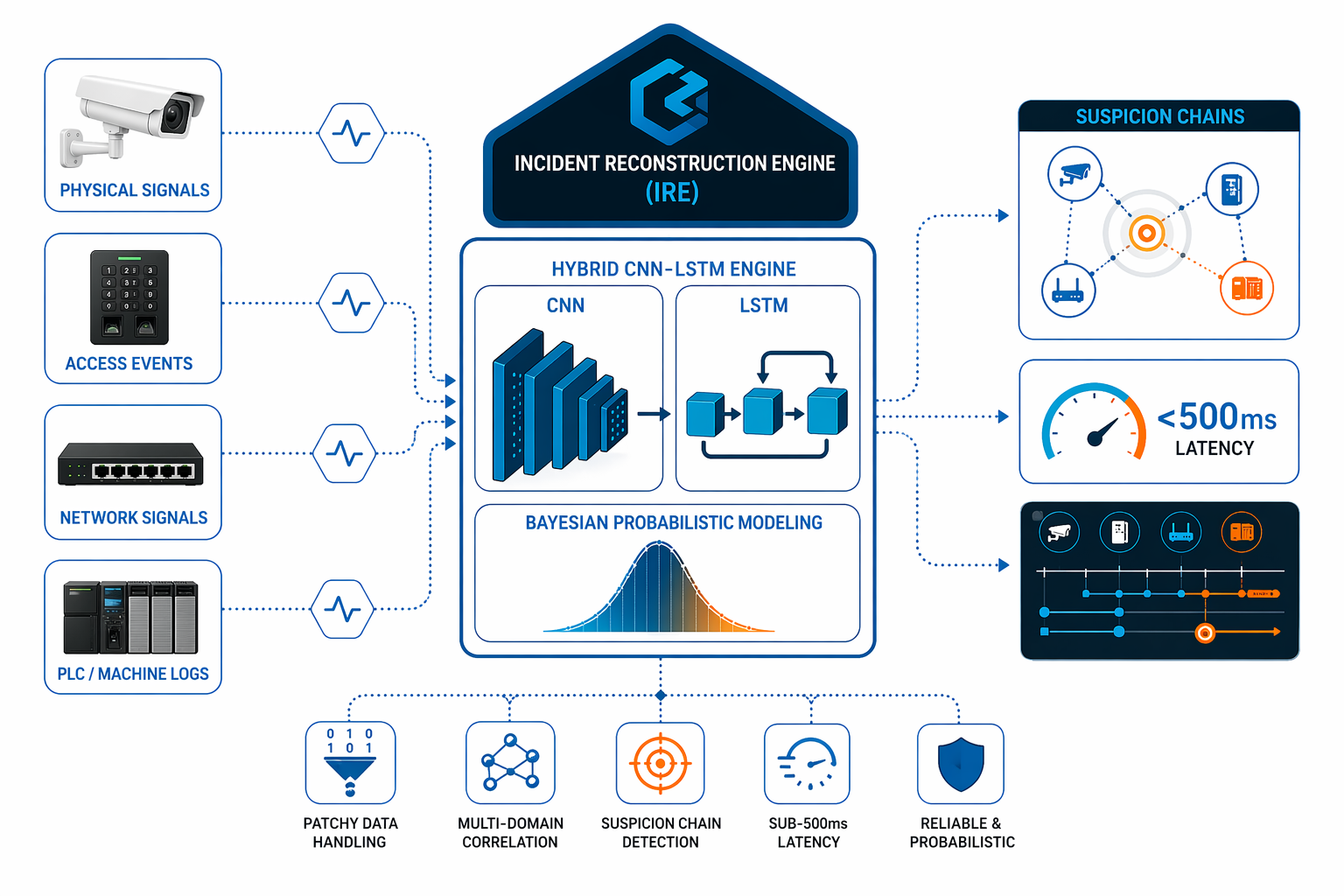
The hybrid CNN-LSTM engine analyses physical and digital signals simultaneously, filling gaps in patchy brownfield data using Bayesian probabilistic modeling. Identifies coordinated "Suspicion Chains" with sub-500ms latency.

Narrative Intelligence Layer
STEP 03

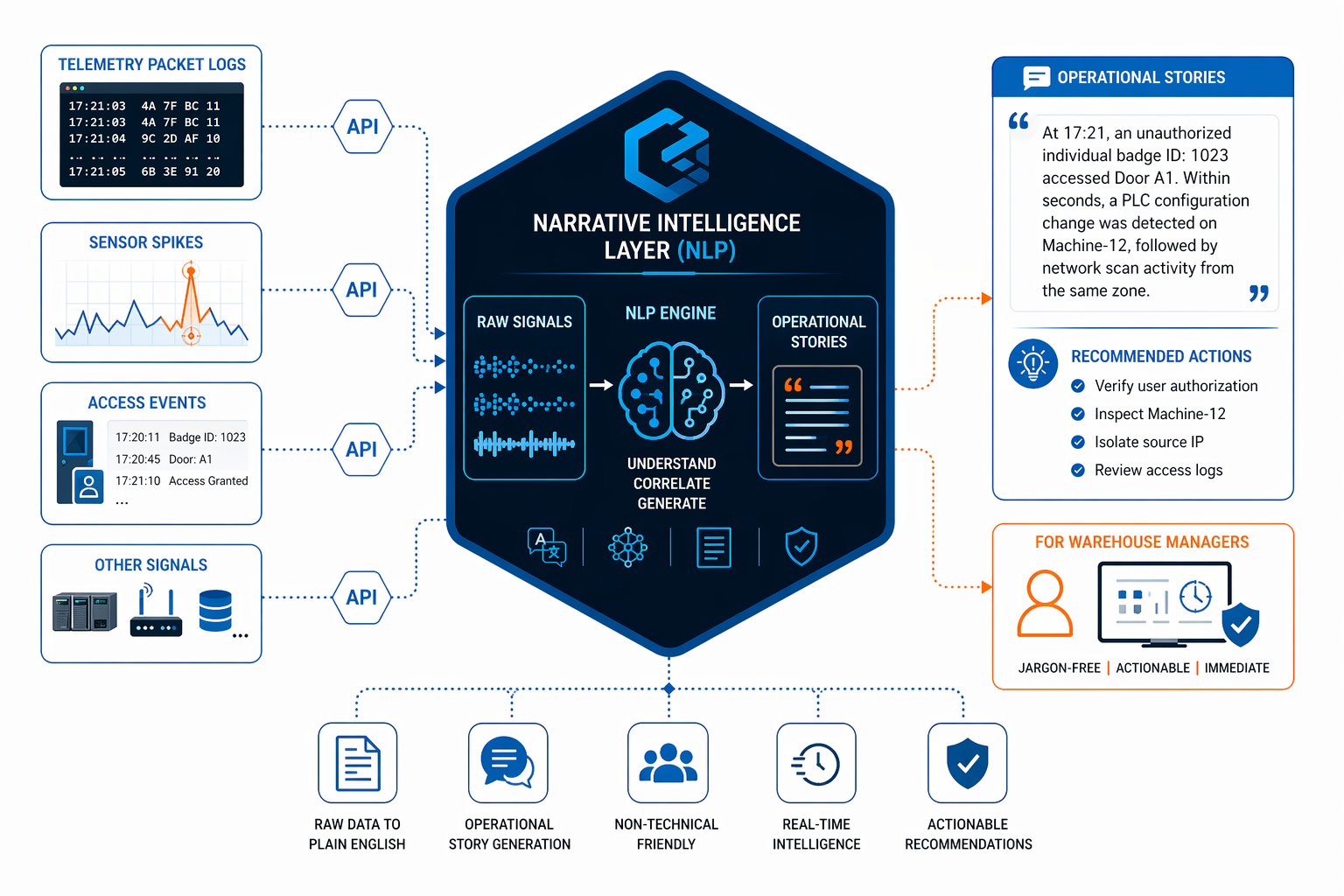
Narrative Intelligence Layer (NLP)

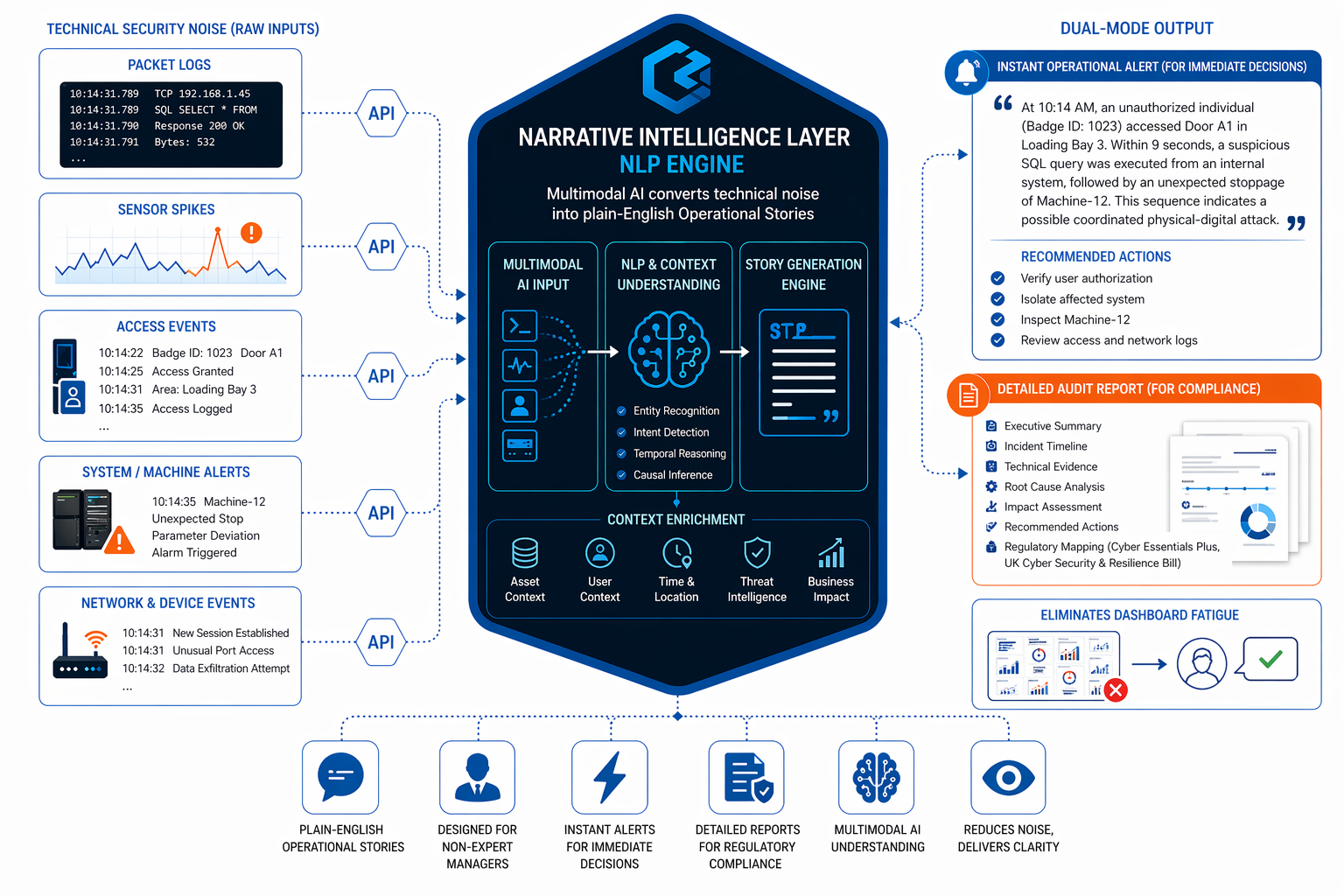
The NLP layer converts raw telemetry packet logs, sensor spikes, access events into plain-English "Operational Stories." Non-technical warehouse managers receive immediate, jargon-free incident descriptions with recommended actions.

Response Guidance and Audit Trail
STEP 04

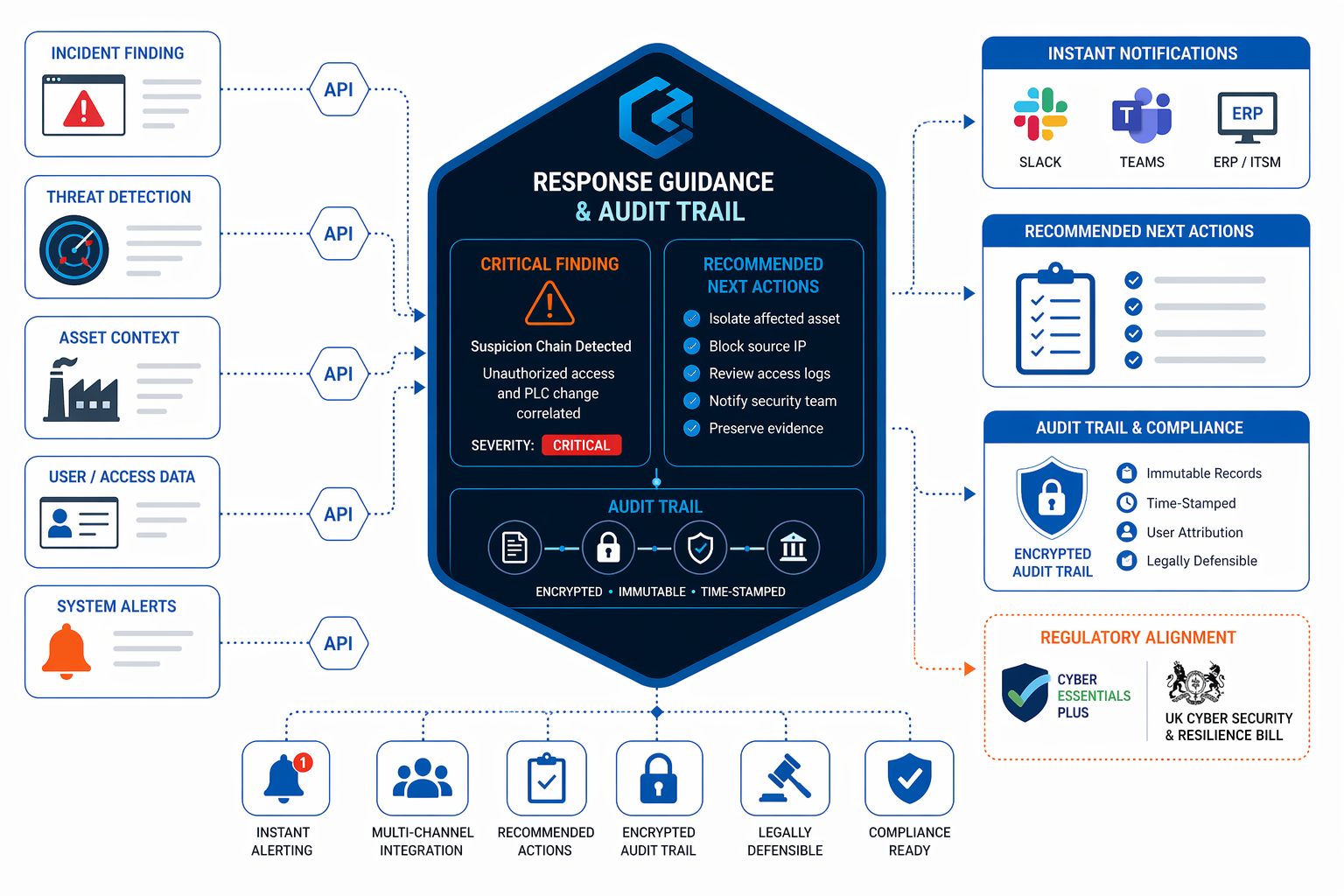
Response Guidance & Audit Trail

Critical findings instantly provide "Recommended Next Actions" via Slack, Teams, or ERP. Every interaction is recorded on an encrypted, legally defensible audit trail supporting Cyber Essentials Plus and the UK Cyber Security & Resilience Bill.

Five Proprietary Industrial AI Engines

The CyberPhysicalLayer framework is powered by five distinct intelligence innovations each a defensible layer in the UK's first proactive cyber-physical middleware, purpose-built for the "brownfield" reality of SME warehouses and workshops.

Cross-Domain Suspicion Chain Engine
Engine A

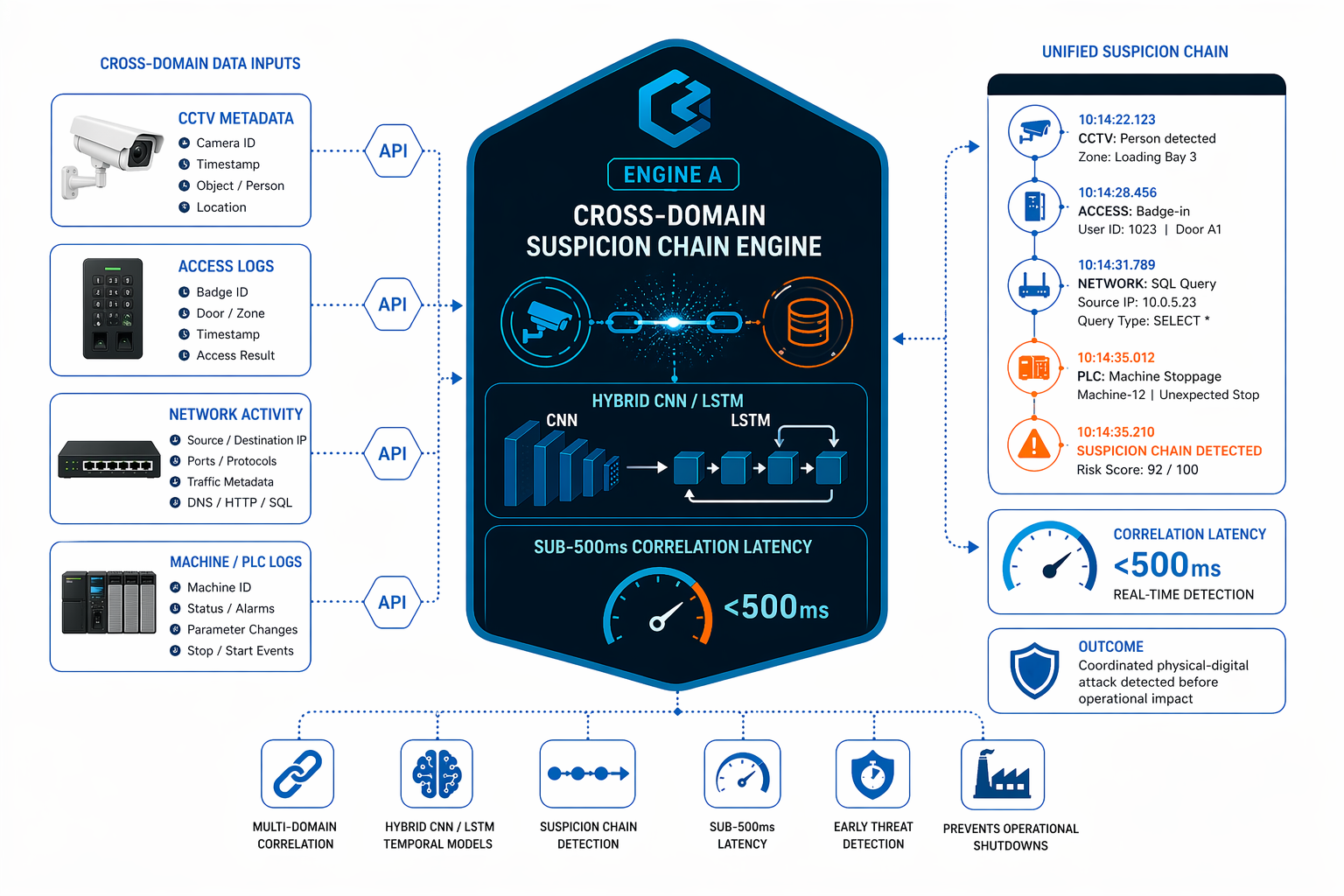
Cross-Domain Suspicion Chain Engine

Real-time correlation of CCTV metadata, access logs, and network activity into unified threat sequences.

Uses hybrid CNN/LSTM temporal models to identify multi-step "Suspicion Chains" linking a physical badge-in event with a subsequent SQL query or machine stoppage into a single unified incident. Achieves sub-500ms correlation latency, detecting coordinated physical-digital attacks before they escalate into operational shutdowns.

Incident Reconstruction Engine
Engine B

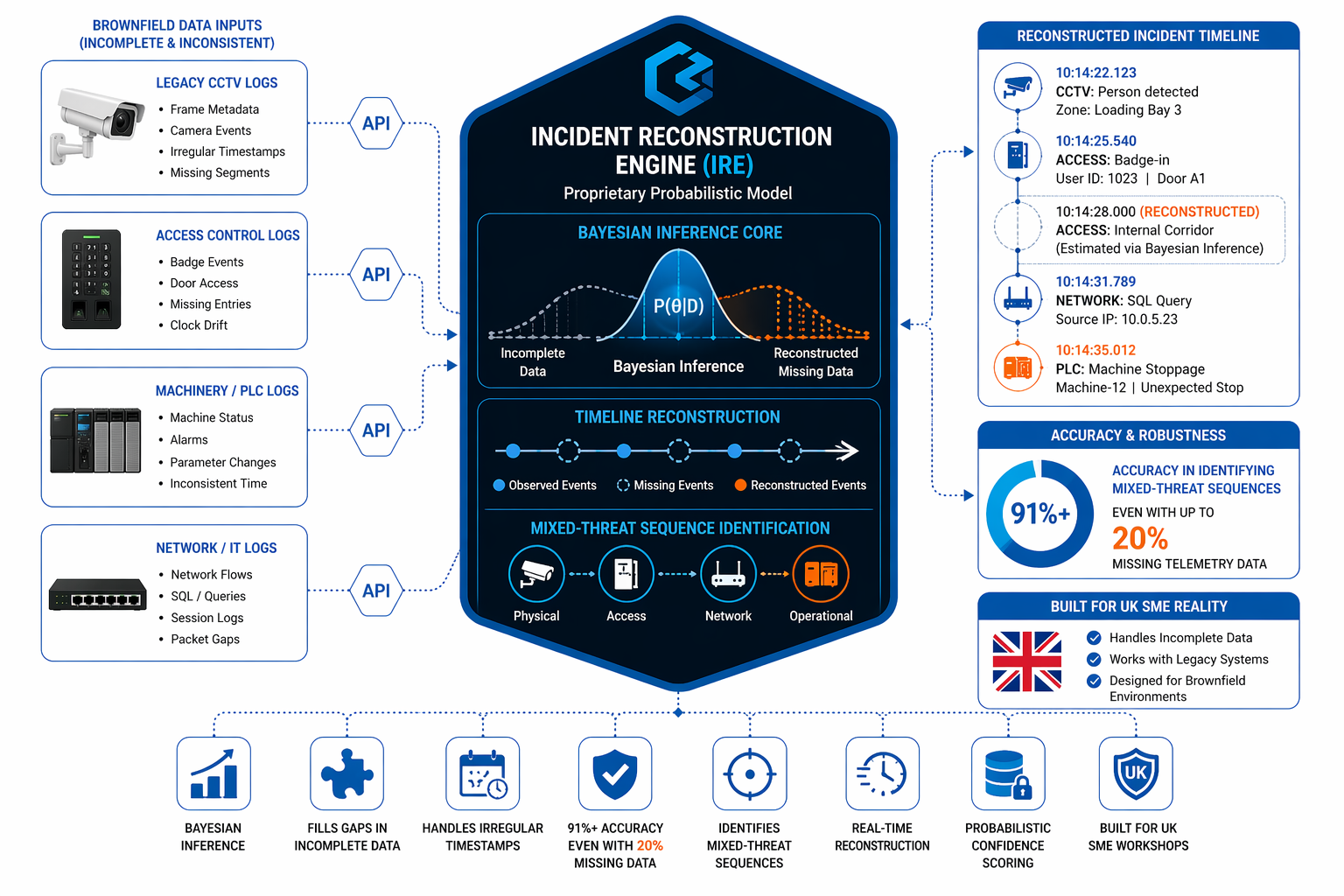
Incident Reconstruction Engine (IRE)

Proprietary probabilistic model designed to reconstruct incident timelines from incomplete brownfield data.

Unlike enterprise tools requiring clean, continuous telemetry, the IRE uses Bayesian inference to "fill the gaps" in legacy CCTV logs and inconsistent machinery timestamps. Achieves 91%+ accuracy in identifying mixed-threat sequences even when up to 20% of telemetry data is missing the operational reality of UK SME workshops.

Narrative Intelligence Layer
Engine C

Narrative Intelligence Layer

NLP engine converting technical security noise into plain-English "Operational Stories" for non-expert managers.

Unlike generic tools outputting complex dashboards, the Narrative Intelligence Layer employs multimodal AI to convert packet logs, sensor spikes, and access events into human-readable stories. Delivers dual-mode output: instant operational alerts for immediate decisions and detailed audit reports for regulatory compliance eliminating "dashboard fatigue."

Offline-First Edge AI Architecture
Engine D

Offline-First Edge AI Architecture

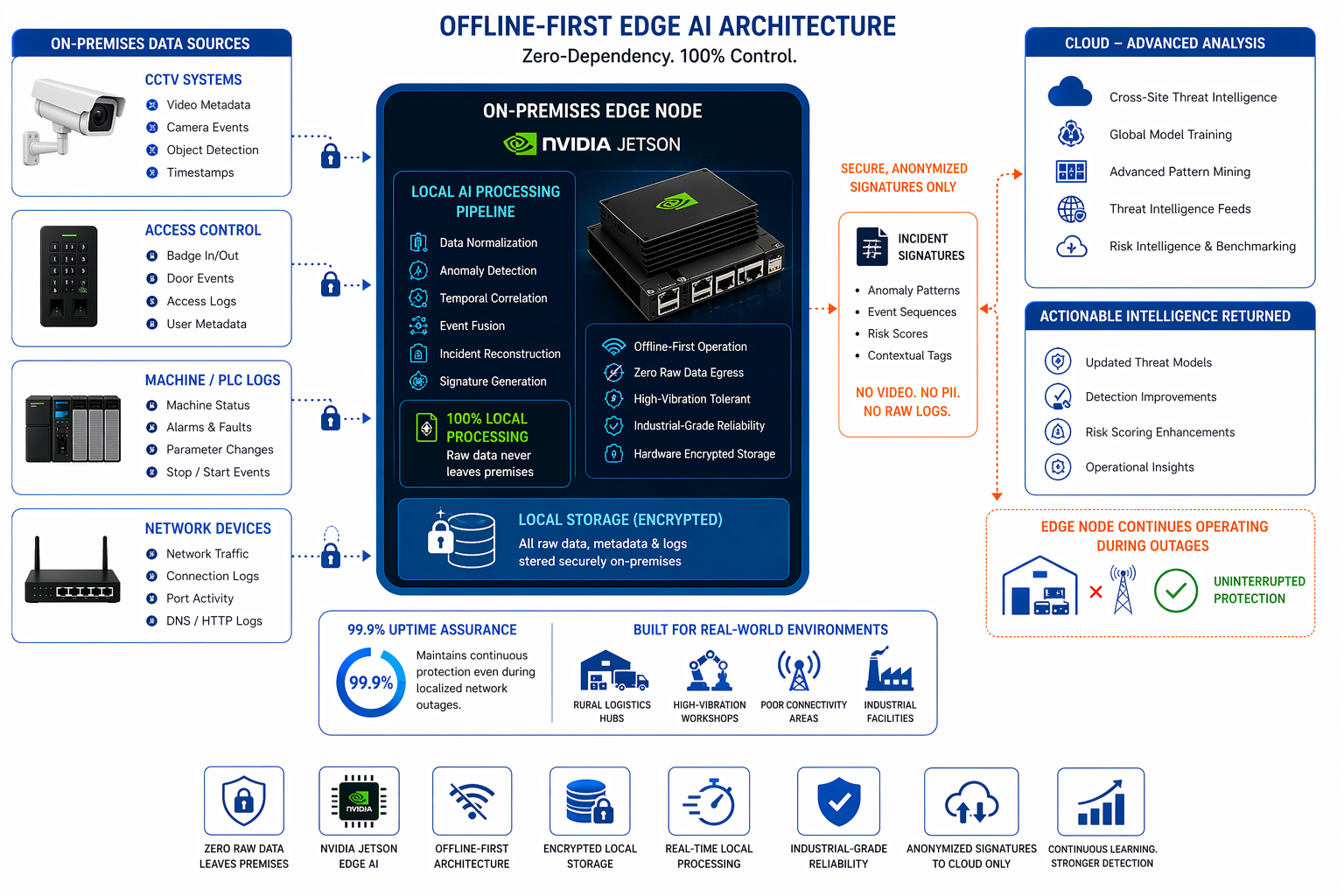
Local NVIDIA Jetson processing ensuring zero-dependency operations within client premises.

CCTV metadata and access logs are processed locally on-site on NVIDIA Jetson nodes. Only anonymized "incident signatures" are sent to the cloud for advanced analysis ensuring raw footage never leaves the client's premises. Maintains 99.9% uptime during localized network outages, critical for rural logistics hubs and high-vibration workshop environments.

Automated Compliance and Audit Framework
Engine E

Automated Compliance & Audit Framework

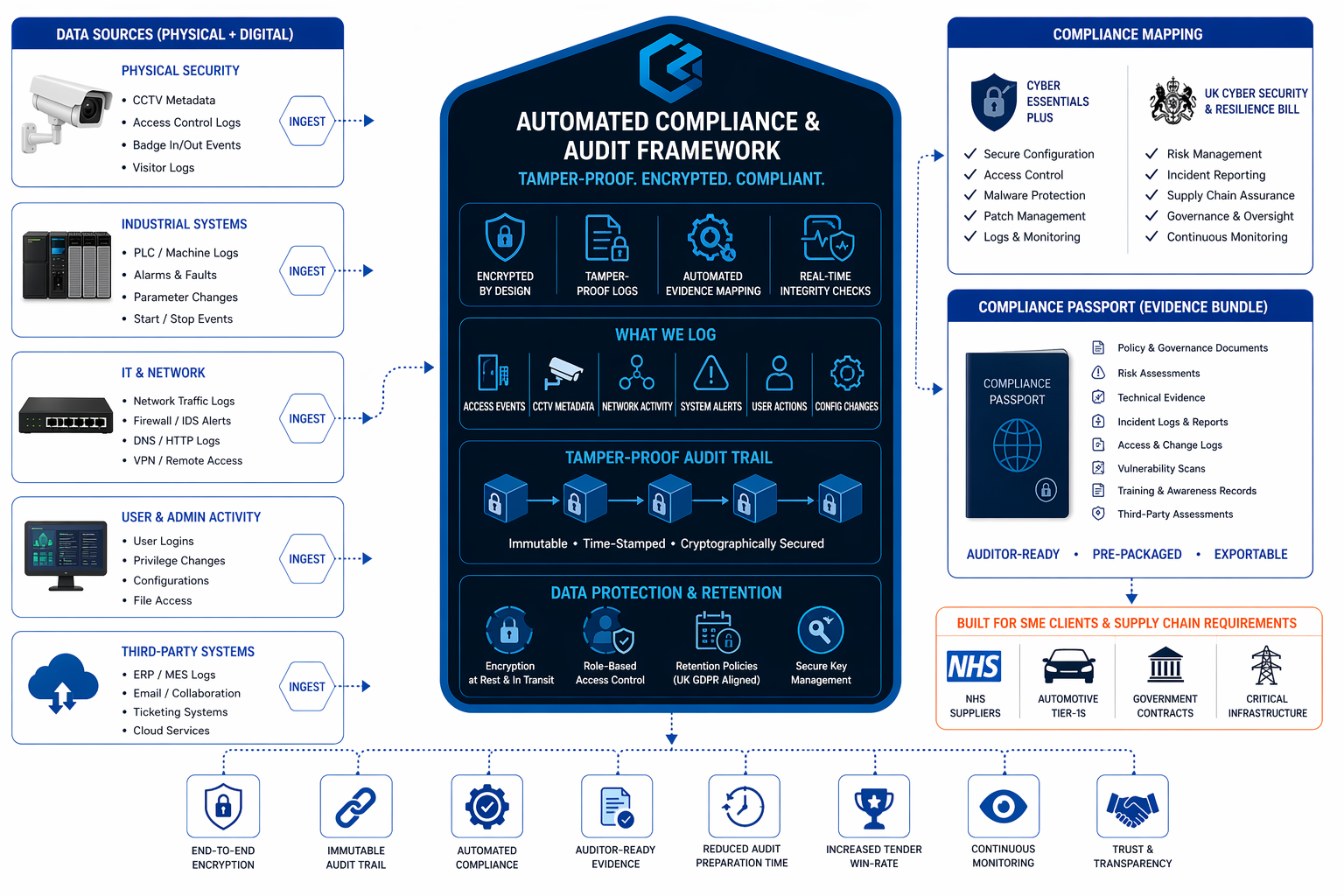
Tamper-proof encrypted audit trails automating UK Cyber Security & Resilience Bill compliance.

Maintains encrypted, tamper-proof logs of every physical and digital interaction, mapped directly to requirements for Cyber Essentials Plus and the UK Cyber Security and Resilience Bill. Includes a "Compliance Passport" a pre-packaged evidence bundle that SME clients present to auditors for contract tenders with NHS, automotive Tier-1s, and government supply chain partners.

Modular Plug-and-Protect Integration
Architecture

Modular Plug-and-Protect Integration

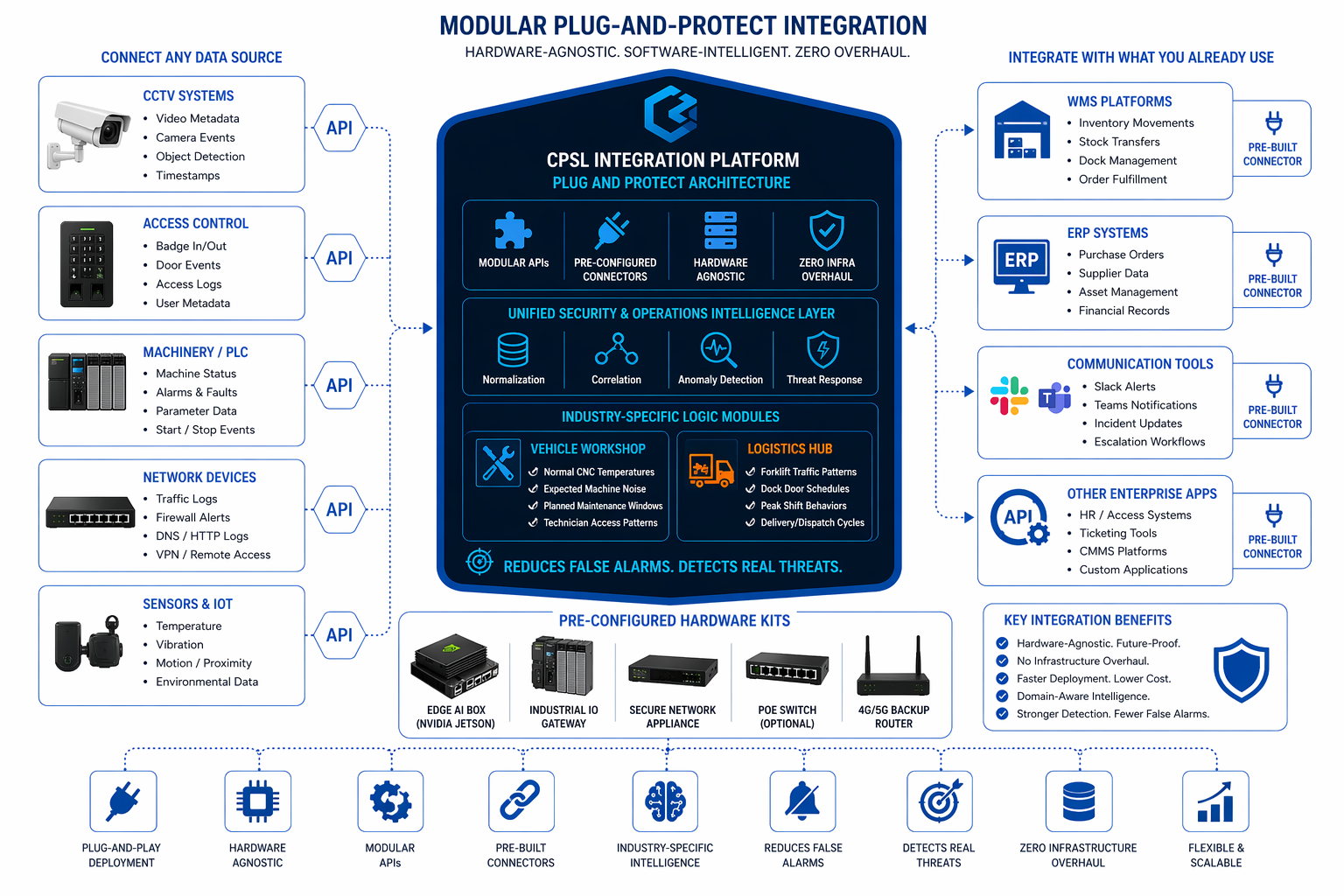
Hardware-agnostic APIs integrating with existing WMS, ERP, Slack, and Teams zero infrastructure overhaul.

Through modular API and pre-configured hardware kits, CPSL integrates with existing Warehouse Management Systems (WMS), ERP platforms, and communication tools. Industry-specific logic modules for "Vehicle Workshop" or "Logistics Hub" understand domain behaviors normal CNC operating temperatures, expected forklift traffic preventing false alarms while catching genuine threats.

£1.2B
UK industrial cyber security sub-sector projected by 2028 driven by Industry 4.0
£300M+
Total Addressable Market across UK SME warehousing and workshop sectors
60,000+
Active logistics hubs and registered workshops lacking unified cyber-physical visibility
£1M+
Projected Annual Recurring Revenue by Year 3 protecting 200+ active industrial sites
UK Regional Distribution Map

The "Golden Triangle"
Logistics Corridor

Over 90% of the UK population can be reached within a four-hour drive from the Midlands "Golden Triangle" home to the highest concentration of SME warehouses and logistics hubs increasingly targeted by hybrid cyber-physical threats.

CPSL's pilot programs target the South East (137 hubs), South West (118), and Scotland (105) corridors first, aligning with UKWA regional logistics association partnerships for rapid deployment.

The UK Cyber Security and Resilience Bill has created an immediate compliance mandate across all regions, with SMEs in critical supply chains now required to adopt measurable incident reporting standards.

Enterprise-Grade Industrial AI.
SME-Friendly Pricing.

A CyberPhysicalLayer Professional subscription costs 90% less than legacy enterprise OT suites delivering continuous cyber-physical visibility and regulatory compliance for UK's industrial backbone.

Basic Tier

Small Workshop

For small vehicle workshops, single-site depots, and independent logistics operators.

£199
per month · billed annually
  • Single-site real-time monitoring
  • Standard narrative incident reports
  • 7-day log retention
  • GDPR & Cyber Essentials compliance
  • Edge AI local processing
  • Email support
Get Started →
Enterprise Tier

Supply Chain / Group

For large logistics networks, NHS-supply warehouses, and Tier-2 defence suppliers.

Custom
avg £1,200+/month · bespoke SLA
  • Everything in Professional, plus:
  • Unlimited site monitoring
  • Custom Brownfield hardware integration
  • Full forensic audit toolkit
  • White-label deployment option
  • 24/7 dedicated security consultation
Enquire Now →

Common Questions

What exactly is the "Cyber-Physical Visibility Gap" that CPSL solves?

+
The Visibility Gap is the systemic disconnect between physical security systems (CCTV, badge access) and digital infrastructure (networks, machine logs, OT). 43% of UK businesses experienced a breach in 2025, yet small warehouses and workshops remain uniquely vulnerable because their security stays siloed. A suspicious badge entry followed by a machine stoppage is viewed as two unrelated events. CPSL's cross-domain correlation engine closes this gap identifying these as a single "Suspicion Chain" coordinated attack in real time, with sub-500ms latency.

What is "Brownfield" resilience and why does it matter for UK SMEs?

+
"Brownfield" refers to legacy industrial environments using older CCTV systems, PLCs, and machinery that produce inconsistent, incomplete, or low-velocity data logs. Enterprise OT tools require high-quality data streams they fail in the real-world SME environment. CPSL's IRE uses Bayesian probabilistic modeling to "fill the gaps" in patchy data, achieving 91%+ accuracy even when up to 20% of telemetry is missing. This is the operational reality of the vast majority of UK warehouses and workshops.

Does CyberPhysicalLayer require replacing our existing CCTV or network infrastructure?

+
No. CPSL is specifically designed as a hardware-agnostic software overlay that works with your existing CCTV cameras, access control systems, and network routers. There is no "rip and replace" requirement. The platform connects via modular APIs and, for edge processing, a pre-configured hardware kit (NVIDIA Jetson based) can be deployed on-site. The core SaaS platform integrates immediately with existing communication tools Microsoft Teams, Slack, and common ERP systems without capital-intensive infrastructure changes.

How does CyberPhysicalLayer comply with UK GDPR for CCTV and employee data?

+
CPSL uses an Edge-First Privacy architecture all CCTV metadata and access logs are processed locally on-site on NVIDIA Jetson nodes. Only anonymized "incident signatures" (not raw video footage) are ever sent to the cloud for advanced analysis. This ensures raw footage never leaves the client's premises, achieving Privacy-by-Design compliance with UK GDPR and the Data Protection Act 2018. All cloud processing uses Azure UK South with AES-256 encryption. The platform is registered as a Data Controller with the UK Information Commissioner's Office.

How does the platform help SMEs comply with the UK Cyber Security and Resilience Bill?

+
The UK Cyber Security and Resilience Bill requires SMEs within critical supply chains to adopt measurable incident reporting and operational resilience standards. CPSL acts as a "Compliance-as-a-Service" tool automatically generating encrypted, tamper-proof audit logs of all physical-digital interactions mapped to Cyber Essentials Plus requirements. The "Compliance Passport" feature produces a pre-packaged evidence bundle that clients present during NHS, automotive Tier-1, or government contract tenders, removing the need for expensive security consultants.

What is the current development status of the platform?

+
CyberPhysicalLayer is at TRL 7 System Prototype Demonstration in Operational Environment. Validated results include 91%+ accuracy in identifying mixed-threat sequences in high-noise environments, sub-500ms correlation latency, 95% reduction in false positives versus generic IT tools, and 99.9% uptime on edge hardware during network outages. Pilot programs are being launched in the Midlands and South East Golden Triangle corridors. The platform is nearing TRL 8 with API integrations for Hikvision, Dahua, and Paxton ready for deployment.
Request a Pilot or
Partnership Discussion

Whether you are an SME warehouse operator, vehicle workshop, logistics group, NHS supply chain partner, Tier-2 defence supplier, or technology integration partner contact us to arrange a demonstration, discuss pilot opportunities, or explore licensing options.

Emailcyberphysicallayeruk@outlook.com
LocationLondon, United Kingdom
Target SectorsSME Warehouses · Vehicle Workshops · Logistics Hubs · NHS Supply Chain · Defence Tier-2 · Industrial SMEs
Pilot RegionsMidlands Golden Triangle · South East · London · North West